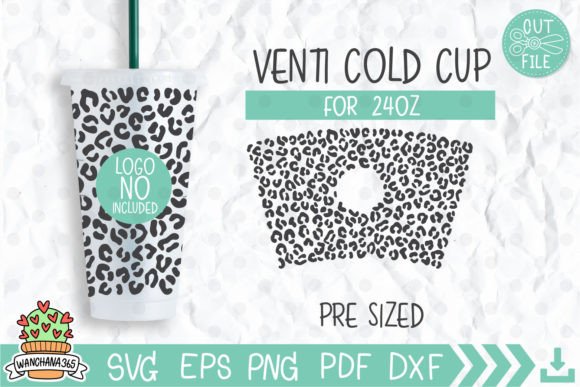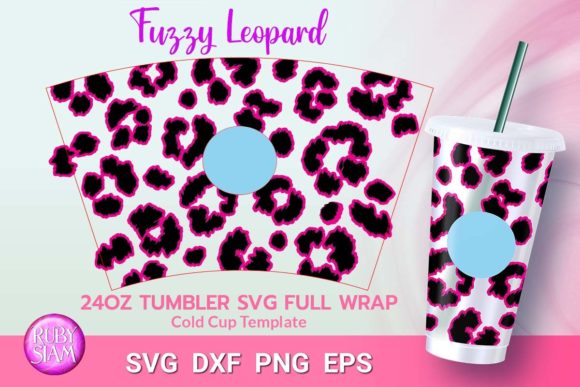
Fuzzy Leopard Print, 24 Oz Cold Cup SVG
Let’s be real: leopard print never goes out of style—but “fuzzy” leopard? That’s where things get interesting. As a designer who’s stitched everything from nursery onesies to boutique aprons and Etsy bestsellers, I opened Fuzzy Leopard Print, 24 Oz Cold Cup SVG expecting boldness, texture, and a little playful attitude. What I found was more nuanced than a typical cold cup wrap—it’s got rhythm, dimension, and a tactile suggestion that translates surprisingly well into embroidery—*if* you know how to read it.
First Impression: Not Just Another Animal Print
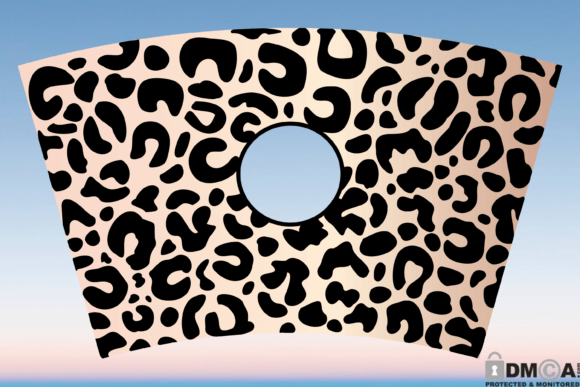
This isn’t the flat, high-contrast leopard you’d use for a quick t-shirt transfer. The “fuzzy” layering in Fuzzy Leopard Print, 24 Oz Cold Cup SVG implies depth—soft edges, subtle gradients, and organic shape variation. Visually, it feels warm, approachable, and slightly vintage-modern. It leans into charm over fierceness, which makes it unexpectedly versatile: think baby blanket corner accents, embroidered tea towel borders, or even a cozy sweatshirt chest motif—not just tumblers.
I tested it as a custom tote bag design for a local coffee shop pop-up. Printed mockups looked sharp, but when I translated it into a machine embroidery design (using vector-to-stitch software), the layered nature helped avoid the “blobby fill stitch” trap many animal prints fall into. The key was preserving those soft transitions without overloading stitch density—something this SVG layout supports well, assuming your digitizer respects its flow.
Where It Shines—and Where It Needs Care
Fuzzy Leopard Print, 24 Oz Cold Cup SVG works beautifully on medium-weight fabrics with stable weaves: canvas totes, cotton twill aprons, structured pillow covers, and even lightweight denim jackets. On sweatshirt embroidery, it reads as luxe and intentional—not busy—especially when scaled to 3.5–4 inches wide and stitched with matte polyester thread for that soft, fuzzy illusion.
But caution applies in three real-world scenarios:
- Small hoop sizes or curved surfaces: The full-wrap layout is designed for tumblers—but that means it stretches across large, continuous areas. If you’re adapting it for caps or baby hats, isolate one repeatable motif (like a single fuzzy rosette) and re-digitize it with proper underlay and reduced density. Don’t force the full wrap onto a 3-inch cap front—it’ll distort.
- Thin or stretchy fabric: That soft edge relies on controlled stitch placement. On jersey or ribbed knit, skip dense fill stitches entirely. Opt instead for an applique design with raw-edge or satin-stitched borders—and always pair with cutaway stabilizer.
- Dark or textured backgrounds: The “fuzzy” effect depends on tonal contrast. On charcoal fleece or linen-look tea towels, test thread colors in both light heather and deep charcoal. A single-color version often reads cleaner than multi-tone attempts here.
What This Means for Your Craft Business
If you’re an Etsy seller or small shop owner building cohesive collections—say, a “Wild & Cozy” line of nursery decor and kitchen textiles—Fuzzy Leopard Print, 24 Oz Cold Cup SVG serves as strong design DNA. You can pull colorways, scale motifs, and repurpose elements across embroidered patches, pillow covers, and personalized baby blankets. Customers respond to its warmth and familiarity, but the “fuzzy” twist keeps it from feeling generic.
That said, don’t assume it automatically elevates every finished product. A poorly stabilized tote bag with heavy fill stitching will flatten the texture and make the pattern look muddy. Likewise, using it on a holiday embroidery project (like a velvet stocking cuff) only works if you simplify the layers first—stitching too much detail into plush fabric defeats the purpose.
Practical Embroidery Designer Notes
Before committing to client work or bulk production, run these checks:
- Test on scrap fabric first—especially if using it for custom apparel or baby embroidery. Felted wool, cotton poplin, and brushed poly all react differently to layered fills.
- Review stitch density in your embroidery file. High-density areas may need reduced underlay or alternate fill angles to prevent puckering on lightweight cotton.
- Confirm hoop size compatibility. The original SVG is built for large-format wraps, so resizing down for a patch or cap requires re-evaluating jump stitches and trim points.
- Inspect small details at 200% zoom—especially around leopard spot edges. If they’re too fine for your machine’s minimum stitch length, simplify them before digitizing.
- Test black-and-white mockups to verify visual hierarchy. Does the fuzzy texture still read without color? If not, adjust contrast or add subtle outline running stitches.
- Compare light vs. dark fabric backgrounds using printable mockups. Some fuzzy transitions vanish on black—consider adding a subtle white underlay layer digitally.
- Use proper stabilizer: medium tear-away for cotton, cutaway for knits, and water-soluble film for delicate items like silk-blend pillow covers.
- Verify licensing before selling finished items or bundling it into digital embroidery kits. Since this is a Graphics listing in the Tumbler Wraps category, commercial use permissions aren’t implied—check the seller’s terms.
A Final Thought for Makers Who Value Integrity
What sets apart great embroidery from “just okay” isn’t complexity—it’s intention. Fuzzy Leopard Print, 24 Oz Cold Cup SVG invites that kind of thoughtfulness. It doesn’t scream for attention; it invites touch, curiosity, and quiet confidence. Used well—as part of a handmade product with careful thread selection, smart stabilizing, and honest scale—it builds trust. Customers feel the care in the stitch, not just the print.
So yes, it started as a tumbler wrap. But in the hands of a thoughtful designer or craft business owner? It becomes something warmer, slower, and more human—a fuzzy reminder that even animal prints have personality.