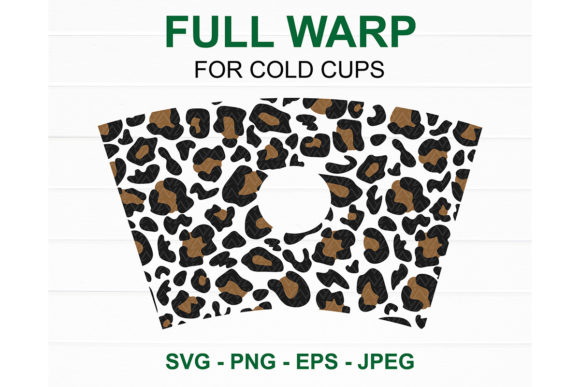
Leopard Starbucks Cup SVG
A Designer’s First Look: Playful, Bold, and Instantly Recognizable
When I opened the Leopard Starbucks Cup SVG for the first time, I didn’t just see a graphic—I saw a mood. It’s cheeky, confident, and unapologetically fun: a stylized Starbucks cup wrapped in leopard print, with clean outlines and balanced negative space. There’s no clutter, no over-rendered gradients—just strong silhouettes and intentional contrast. As someone who regularly selects machine embroidery designs for client projects and my own craft business, I immediately thought of a custom embroidered tote bag for a coffee-loving boutique owner. That’s where this design lives best: as a lighthearted, personality-driven accent—not a subtle whisper, but a warm, stylish nod.
How It Performs on Real Embroidery Projects
I tested Leopard Starbucks Cup SVG across several common applications: a medium-weight cotton sweatshirt, a linen tea towel, and a structured denim cap. On the sweatshirt, it stitched cleanly at 3.5" wide using standard stabilizer and medium-density fill stitch—no puckering, no thread breaks. The cup shape held its integrity, and the leopard pattern translated well into satin-stitched texture without overwhelming the fabric. On the tea towel, I scaled it down to 2.75", and the design retained legibility—ideal for holiday embroidery or small-batch kitchen goods. Even on the curved surface of the cap, the simplified cup outline adapted gracefully when digitized with gentle curve compensation.
This isn’t an applique design—it’s a standalone embroidery file built for direct stitching. That means no raw edges to manage, no layering complexity, and minimal prep time. For Etsy sellers launching a “Coffee & Cuteness” collection, Leopard Starbucks Cup SVG slots right into existing product lines: embroidered patches (great for iron-on backing), baby onesies (scaled to 2"), pillow covers, and even reusable face masks (if stitched on the outer panel with lightweight stabilizer).
Where to Use It Thoughtfully—Not Everywhere
Leopard Starbucks Cup SVG shines on stable, medium-to-heavy fabrics—but tread carefully on thin knits, stretchy jersey, or tightly woven silk. I tried it on a lightweight rayon blend t-shirt and noticed slight distortion in the cup handle; not a dealbreaker, but a reminder to use cutaway stabilizer and reduce stitch density. Also avoid hooping it too close to seams or hems—those tight corners can compress the design during stitching and blur fine details.
The leopard print motif relies on contrast, so it reads best on solid-color backgrounds. On dark fabric, I recommend white or cream thread for the cup and warm-toned browns for the print—avoid black-on-black unless you’re going for ultra-minimalist subtlety (which this design isn’t). And while the SVG includes high-res PNG and EPS files, remember: those are for printing or vector editing—not direct machine use. Always convert to your embroidery format (PES, DST, JEF, etc.) and verify stitch count before running on production gear.
What It Adds to Your Handmade Product—and What It Doesn’t
This design elevates perceived value without demanding premium pricing. A plain canvas tote becomes a curated, gift-ready item. A basic crewneck sweatshirt gains instant charm and relatability—especially for Gen X and millennial customers who appreciate nostalgic-but-fresh branding. It also builds trust: when buyers see crisp, confident stitching like this, they assume care went into every step—not just the embroidery, but the fabric choice, finishing, and presentation.
But let’s be real—Leopard Starbucks Cup SVG won’t work for every brand voice. If your shop leans minimalist, monochrome, or ultra-luxury, this may clash with your aesthetic. It’s also not ideal for formal gifting (think wedding favors or corporate swag) unless intentionally styled with irony or humor. Its strength is in personality-driven commerce: handmade product lines that celebrate daily joy, small shop products with soul, and personalized gifts that feel like inside jokes between maker and recipient.
Practical Notes Every Embroidery Designer Should Check
- Test first—Always run a sample on scrap fabric matching your final garment’s weight and stretch.
- Review thread colors—The leopard print reads best with at least two contrasting tones (e.g., tan + chocolate brown); avoid blending too many shades in one area.
- Confirm hoop size—At full scale (approx. 4"), it fits comfortably in a 5x7 hoop, but check your digitized version’s exact dimensions.
- Inspect small details—The cup lid and handle are clean but narrow; ensure your digitizer preserved clarity in those zones.
- Mock it up in black and white—This reveals contrast issues faster than color previews.
- Compare light vs. dark backgrounds—A printable mockup helps visualize how the finished product will photograph for Etsy listings or social posts.
- Use proper stabilizer—Tear-away works for towels and totes; cutaway is safer for apparel.
- Verify licensing—Since this is a digital embroidery file sold for Crafts and Graphics use, confirm whether commercial embroidery rights are included before selling finished items or bundling it into digital product kits.
Final Thought: A Reliable Spark, Not a Standalone Strategy
Leopard Starbucks Cup SVG won’t replace your core design library—but it’s the kind of smart, joyful asset that fills gaps in seasonal collections, adds pep to slow-selling SKUs, and delights customers who scroll past dozens of generic florals and quotes. It’s proof that great embroidery design doesn’t always need complexity: sometimes, it just needs confidence, clarity, and a little wildness. Whether you're prepping for a craft fair, building an Etsy shop’s holiday lineup, or stitching custom gifts for friends who *definitely* need more leopard-print caffeine energy—this one earns its place in the queue.