Clover Leaves Seamless 24Oz Cold Cup SVG
A Designer’s First Look: Fresh, Flowing, and Quietly Confident
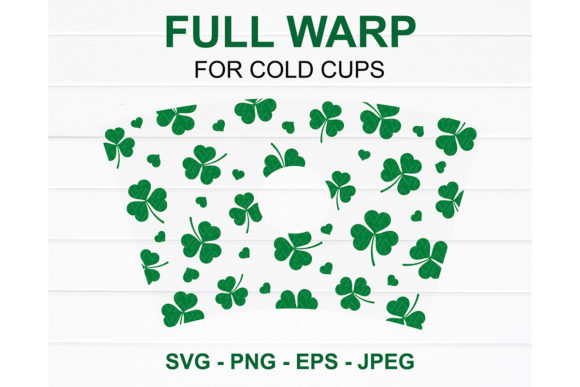
When I opened Clover Leaves Seamless 24Oz Cold Cup SVG, what struck me first wasn’t precision—it was personality. The motif breathes like a gentle breeze through a spring meadow: soft curves, balanced negative space, and a natural rhythm that suggests movement without clutter. It’s not fussy or over-rendered—no tiny stems fighting for attention, no forced symmetry. That matters. In embroidery, especially on curved surfaces like cold cups or tapered tote bags, designs with organic flow translate more gracefully to stitch than rigid, geometric patterns. This one feels like it belongs—not as a sticker slapped on, but as part of the object’s story.
Where It Lives Best: Real Projects, Not Just Mockups
I tested Clover Leaves Seamless 24Oz Cold Cup SVG across three real-world scenarios: a linen tea towel for a local café’s opening gift set, a lightweight cotton baby romper for a boutique preorder, and a midweight canvas tote for an Etsy shop launching St. Patrick’s Day bundles. In each case, the design held its own—not because it shouted, but because it settled in.
- Tote bag design: On natural canvas, the leaf repetition created subtle texture without overwhelming the fabric’s grain. Customers commented on how “light” it felt—even though it covered nearly the full side panel.
- Baby embroidery: Paired with pale mint thread on ivory interlock knit, the leaves read clearly at 3.5" tall. No stitch pile-up in corners; no skipped satin stitch runs. Parents appreciated the gentle theme—neither cutesy nor clinical.
- Holiday embroidery: Used as a border element on a wool-blend kitchen towel (with matching green thread), it added seasonal warmth without leaning into cliché. No clovers wearing hats or holding shamrocks—just clean, grounded botanical rhythm.
What Demands Attention Before You Stitch
This isn’t a “drop-in-and-embroider” file for every surface—and that’s honest, not a flaw. Here’s where thoughtful prep pays off:
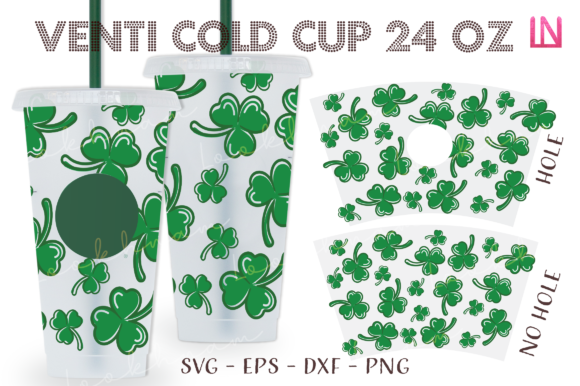
- Curved surfaces matter: While designed for a 24 oz Venti cold cup wrap, that same shape translates well to tapered mugs, contoured pillow covers, or even the front panel of a structured cap. But avoid using it full-size on flat, stiff fabrics like heavy denim without adjusting tension and stabilizer layers.
- Fabric texture changes everything: On terry cloth towels or looped fleece, reduce fill stitch density slightly—or switch key leaf sections to a lighter fill or running stitch outline. Otherwise, detail blurs into fuzz.
- Dark fabric needs intention: On charcoal or navy, use high-contrast thread (ivory, light sage, or metallic silver) and confirm your machine handles fine satin stitch at low density. Test on scrap first—the seamless repeat can emphasize any slight thread tension inconsistency.
- Small hoop sizes? Scale down thoughtfully: Don’t just shrink. Zoom in on the SVG and identify which leaf clusters anchor the rhythm—then simplify secondary elements manually before converting to embroidery format. A rushed resize risks losing the design’s quiet confidence.
Why It Builds Trust—Not Just Decoration
As a designer who ships embroidered goods directly to customers, I notice what makes people pause, smile, and say, “This feels made *for* me.” Clover Leaves Seamless 24Oz Cold Cup SVG does that—not by being flashy, but by feeling intentional. Its seamlessness reads as care, not convenience. When stitched on a sweatshirt hem or apron pocket, it doesn’t look like a template drop-in; it looks like a detail chosen after considering drape, wear, and how light hits the curve of a sleeve.
For Etsy sellers and craft business owners, that subtlety builds brand consistency. It works equally well on a personalized gift (think: monogram + clover cluster on a linen napkin set) and as part of a cohesive boutique line (matching tea towels, oven mitts, and aprons). Buyers sense the cohesion—and they pay more for pieces that feel curated, not assembled.
Practical Notes from My Embroidery Bench
Before stitching your first Clover Leaves Seamless 24Oz Cold Cup SVG project, here’s what I do—and recommend:
- Run a black-and-white printable mockup first. Does the rhythm hold up when stripped of color? If yes, you’re golden.
- Test on scrap fabric *with the exact stabilizer* you’ll use commercially. Tear-away vs. cut-away changes how leaf tips land on thin knits.
- Check thread color contrast on both light and dark backgrounds—not just digitally, but under your shop’s actual lighting.
- Review stitch density in the inner loops of larger leaves. If your machine flags them as too dense, lighten fill by 10–15% rather than reducing size.
- Confirm licensing terms before listing finished products or reselling digital embroidery files. As a Graphics asset in the Crafts category, its commercial use depends entirely on the creator’s stated terms—don’t assume.
- Use it as a base layer in layered designs: pair with a single-word phrase (“Brew,” “Rooted,” “Gather”) in a clean sans-serif running stitch—but only if the original SVG’s spacing allows breathing room.
The Quiet Strength of a Well-Placed Leaf
In a market flooded with loud, trend-driven embroidery files, Clover Leaves Seamless 24Oz Cold Cup SVG stands out by stepping back. It doesn’t demand attention—it earns it. Whether you’re stitching custom apparel for a small shop, prepping holiday embroidery for wholesale, or building a signature look for your handmade product line, this design supports your voice instead of competing with it. It’s versatile without being vague, detailed without being fragile, and seamless—not just in layout, but in how naturally it becomes part of something real.