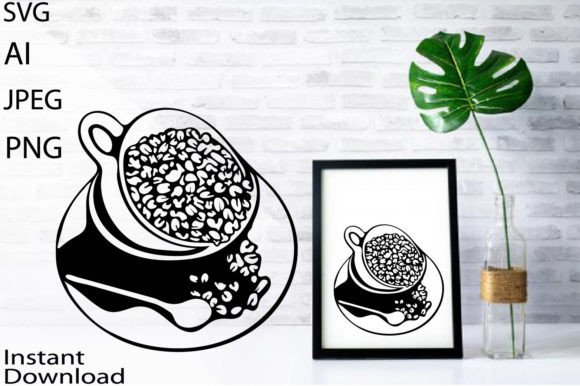
Coffee Cup SVG Vector Art Work Design
First Impressions: Warm, Simple, and Ready for Stitching
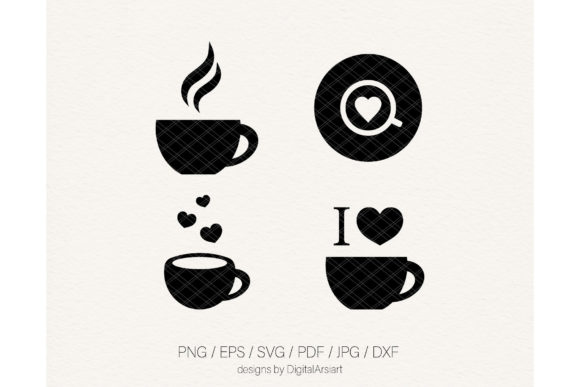
Opening Coffee Cup Svg Vector Art Work Design feels like pulling up a favorite mug—comforting, familiar, and quietly intentional. It’s not overly detailed or fussy; instead, it leans into clean lines, balanced proportions, and a gentle silhouette that reads well at small sizes. The cup sits upright with subtle steam curls, no intricate handles or ornate patterns—just enough personality to feel handmade without demanding perfection from your needle. That simplicity is its strength: it’s the kind of design that lands softly on a baby onesie, holds its own on a heavyweight sweatshirt, and still looks intentional on a linen tea towel.
A Real Project Test: Embroidering a Linen Tote for a Local Café Pop-Up
Last week, I prepped a set of custom linen tote bags for a neighborhood café’s weekend pop-up—each bag needed a small, friendly emblem near the top corner. I chose Coffee Cup Svg Vector Art Work Design as the anchor motif. Why? Because it scaled cleanly down to 2.5 inches wide without losing shape, and its open negative space meant fewer fill stitches—ideal for lightweight, loosely woven linen. I ran a quick test on scrap fabric with medium tear-away stabilizer and standard 40-weight poly thread. The result? Crisp edges, smooth satin-stitch curves on the cup rim, and steam lines that stitched out as delicate running stitches—not brittle, not lost. Customers responded instantly: “Oh, that’s *us*,” one barista said, pointing to the cup. That’s the quiet power of this design—it doesn’t shout; it connects.
Where It Shines (and Where to Pause)
Coffee Cup Svg Vector Art Work Design works especially well for:
- Custom apparel — Sweatshirt embroidery, crewneck tees, and aprons benefit from its centered, vertical orientation and moderate width.
- Baby embroidery — On onesies or burp cloths, its soft contours read as gentle and age-appropriate—no sharp angles or dense fills to irritate sensitive skin.
- Embroidered patch creation — Clean outer edge + minimal interior detail = easy cut-and-sew application, even for beginners.
- Holiday or gift embroidery — Paired with a simple “Good Morning” or monogram, it elevates mugs, pillow covers, and kitchen towels without competing for attention.
- Small shop product consistency — As part of a cohesive line (think: matching totes, mugs, and tea towels), it builds recognizable brand warmth across physical and digital touchpoints.
But—and this matters—don’t assume it’s universally foolproof. Use caution when:
- Stitching on stretchy fabric like knits or ribbed cuffs without proper cut-away stabilizer—the cup’s base can distort under tension.
- Applying to dark fabric without testing thread contrast first; light-colored fills may need an underlay or denser stitch to avoid shadowing.
- Using very small hoop sizes (<3” diameter) where tight corners or fine steam lines might compress or skip.
- Layering over textured surfaces like corduroy or thick terry cloth—those subtle steam curls could vanish in the pile.
- Selling as a digital embroidery file or bundled design asset—always verify licensing terms before offering it commercially, especially since it’s listed under Freebies and Graphics.
What It Adds to Your Finished Product—Beyond the Stitch
This isn’t just about how it sews—it’s about what it communicates. A well-executed Coffee Cup Svg Vector Art Work Design subtly reinforces trust: it says “thoughtful,” not “template.” On an Etsy listing, it lifts perceived value—customers scroll past generic clipart but pause for something that feels curated and tactile. For craft fairs or boutique shelves, it helps your handmade product stand out through restraint, not clutter. And for repeat buyers—say, a customer ordering matching mugs and pillow covers—it creates continuity that feels intentional, not accidental.
Practical Designer Notes Before You Stitch
Before committing to your first run, try these real-world checks:
- Test on scrap fabric—same type, same color, same stabilizer you’ll use for the final piece.
- Review stitch density in your embroidery software; if fills look overly heavy for lightweight fabric, reduce density by 10–15%.
- Confirm hoop size compatibility—especially for curved items like caps or tapered pillow covers.
- Inspect small details at actual stitch-out size: do steam lines hold? Does the handle read clearly?
- Mock it up in black and white first—this reveals contrast issues before thread is loaded.
- Compare light vs. dark backgrounds using printable mockups—what works on ivory linen may disappear on charcoal sweatshirts.
- Use appropriate stabilizer: medium tear-away for stable wovens, cut-away for knits, and water-soluble for sheer layers.
- Verify commercial use rights—since this is a Freebies category Graphics item, double-check whether resale of finished embroidered goods or redistribution of the file is permitted.
Final Thought: Simplicity, Done Right, Is Never Basic
Coffee Cup Svg Vector Art Work Design won’t win awards for complexity—but it wasn’t built to. It was built to land cleanly, stitch reliably, and resonate quietly. Whether you’re an Etsy seller bundling digital embroidery files, a small shop owner embroidering staff aprons, or a crafter stitching personalized holiday gifts, this design earns its place by doing less, but doing it well. In a world full of overdesigned assets, that kind of thoughtful restraint is rare—and useful. Just remember: great embroidery starts long before the machine hums. It starts with knowing exactly what your design asks of fabric, thread, time, and intention.