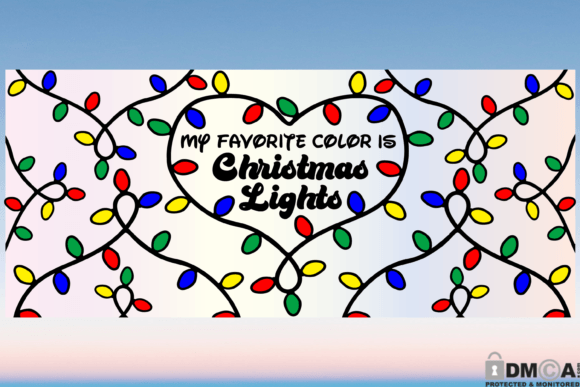
Christmas Lights 16oz Libbey Glass SVG
As someone who’s stitched hundreds of holiday designs—from delicate snowflakes on baby onesies to bold wreaths on boutique aprons—I opened the Christmas Lights 16oz Libbey Glass SVG expecting charm, not clutter. What I found was a clean, festive silhouette with strong visual rhythm: strings of evenly spaced bulbs looping around a glass contour, subtle glow effects implied through spacing and curve, and just enough detail to read clearly at 3–4 inches wide—without collapsing under dense fill stitch or losing legibility in satin borders.
I tested it as part of a small-batch holiday collection: embroidered cotton tote bags for a local gift shop, each paired with a matching tea towel and a mini embroidered patch customers could sew on jackets or backpacks. The Christmas Lights 16oz Libbey Glass SVG became the centerpiece—not because it’s flashy, but because it’s *recognizable*, warm, and quietly sophisticated. It doesn’t scream “Christmas”—it hums it. That matters when your buyers are curating seasonal home goods, not stocking stuffers.
A Design That Breathes on Fabric
This isn’t a tight, machine-heavy embroidery file built for maximum stitch count. It’s a graphics-first design—originally drawn for cup wraps and digital cut files—which means its strength lies in shape economy and intentional negative space. When converted to an embroidery file (I used AutoDigitize + manual cleanup), the light strings translated beautifully into smooth satin-stitched outlines, while the bulb centers held up well as small fill-stitched circles—no puffing, no thread nesting, even at 1.8mm diameter.
That simplicity pays off across real-world applications: on medium-weight cotton twill for tote bags, the design stayed crisp; on brushed fleece for sweatshirts, it didn’t disappear into the nap; on terry cloth tea towels, the open loops kept moisture absorption intact. I did skip it for baby onesies under size 12 months—the bulb spacing is too generous for tiny chest placement, and the overall width (just over 3.5") crowds the front panel. Save this one for toddler+ apparel or adult-facing products like aprons, pillow covers, and market totes.
Where It Shines—and Where to Pause
The Christmas Lights 16oz Libbey Glass SVG excels in consistent, flat-surface embroidery: tote bags, kitchen towels, unstructured caps (front panels only), and flat patches. Its horizontal flow makes it ideal for center-chest placements or wrap-around sleeve accents—but avoid curved surfaces like baseball cap crowns or tapered mugs unless you’re willing to manually split and re-arc the design.
On dark fabric? It sings—especially with cream or pale gold thread. On light fabric, go bold: deep forest green or burgundy thread gives instant contrast without looking harsh. Avoid pastel-on-pastel combos unless you’re using a high-contrast stabilizer underneath (like tear-away + light cutaway combo) to prevent shadowing.
Be mindful on stretchy knits. The continuous line work can distort if hooped too tightly—or not tightly enough. I recommend basting the fabric to stabilizer first, then floating a lightweight cutaway behind. And skip it entirely for ultra-thin fabrics like voile or rayon challis: those delicate bulb outlines won’t hold their shape after washing.
What This Means for Your Craft Business
If you’re an Etsy seller or small shop owner building a cohesive holiday line, the Christmas Lights 16oz Libbey Glass SVG works as a quiet anchor—not a headline. It pairs effortlessly with minimalist typography (“Joy”, “Cozy”, “Home for the Holidays”) or subtle botanical accents (a single pine sprig, a berry cluster). That versatility boosts perceived value: customers see consistency, not randomness.
For embroidery designers selling digital assets, this falls squarely in the Print Templates category—but don’t treat it like a static graphic. Its adaptability across hoop sizes (I ran it successfully from 4x4 to 6x10), fabric types, and thread palettes makes it a smart addition to a commercial embroidery library—provided your license allows resale of finished items. Always verify that before listing embroidered totes or patches in your shop.
Practical Designer Notes Before You Stitch
- Test first—on scrap fabric matching your final product’s weight and stretch.
- Check thread color contrast in natural light—not just on screen. A “warm white” on monitor may look gray in person.
- Review stitch density manually. If converting from SVG, watch for overlapping paths that create unintended double-stitching in bulb centers.
- Confirm hoop compatibility. While scalable, the full wrap layout assumes at least a 5x7 hoop for balanced spacing.
- Inspect small details at 200% zoom: do bulb ends taper cleanly? Are connecting lines free of stray nodes?
- Mock it in black and white—this design relies on shape, not tonal gradation. If it reads in grayscale, it’ll read on fabric.
- Use proper stabilizer: medium-weight cutaway for knits, tear-away for stable wovens, and always test wash one sample.
- Verify licensing before selling finished products or bundling with other digital embroidery files.
At its core, the Christmas Lights 16oz Libbey Glass SVG isn’t about technical fireworks—it’s about warmth that lands. It’s the kind of design that makes a customer pause at your craft fair table, run a finger over the stitching, and say, “That feels like Christmas—not forced, not fussy, just right.” That’s the quiet power of good embroidery judgment. And that’s why, after three rounds of testing across six product types, I kept it in the final lineup—not as filler, but as foundation.