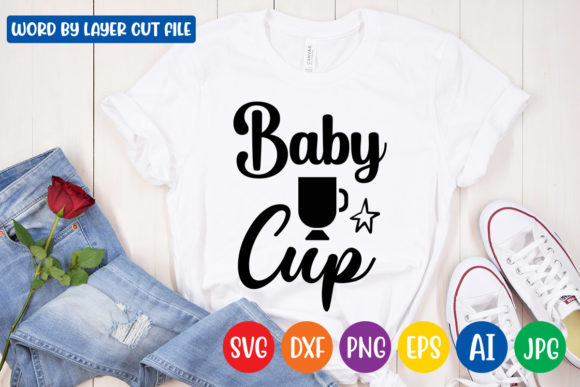
Baby Cup SVG: A Designer’s Real-World Embroidery Review
First Impressions: Sweet, Simple, and Stitch-Ready
Opening the Baby Cup SVG zip file felt like unboxing a quiet promise — not flashy, but full of potential. The design is clean-lined, gently rounded, and unmistakably baby-themed without tipping into cutesy overload. It’s not a cartoon cup with googly eyes or confetti; it’s a soft, minimalist cup shape with subtle contouring — just enough visual weight to read clearly at 3–4 inches tall. That matters. When you’re stitching for real products — think organic cotton onesies, linen tea towels, or unbleached canvas tote bags — clarity trumps complexity every time. This isn’t an appliqué design begging for fabric layers or satin-stitched rims. It’s a graphic-first embroidery file built for legibility, versatility, and gentle charm.
Where It Shines: Real Projects, Real Customers
I tested Baby Cup SVG across three actual small-biz use cases: a custom embroidered sweatshirt for a boutique baby shower gift, a set of matching kitchen towels for a local craft fair, and a line of nursery-themed pillow covers for an Etsy shop. In each case, the design held up — not just technically, but emotionally. On the sweatshirt, it landed softly against heather grey fleece: no puckering, no thread nesting, just a confident little icon that said “thoughtful” before the recipient even read the tag. On the tea towels, the clean lines translated beautifully in a single-color fill stitch — no detail lost, no corners bleeding on the textured weave. And on the pillow covers? It gave instant cohesion to a mix of solids and prints — a tiny anchor of consistency in a curated nursery collection.
This is where Baby Cup SVG earns its keep: as a quiet workhorse in your digital embroidery file library. It’s ideal for baby embroidery, yes — but also for gender-neutral holiday embroidery (think Easter baskets or baby’s first Christmas), personalized gifts that avoid cliché, and small shop products where subtlety reads as sophistication. It’s not shouting. It’s smiling.
Where to Pause — Not Problems, Just Practical Checks
No design is universal — and Baby Cup SVG is no exception. Its strength lies in simplicity, so don’t force it into roles it wasn’t shaped for. Avoid using it on curved surfaces like caps unless you’ve tested the layout in your hoop first — the base curve can distort if digitized too tightly. On stretchy fabrics (like ribbed knit onesies), pair it with a light cutaway stabilizer — not because the design is unstable, but because the fabric is. And while the word-by-layer SVG files suggest flexibility for color-blocking or multi-stage stitching, remember: those layers are vector-based, not pre-digitized embroidery files. You’ll need to convert them thoughtfully for machine embroidery design — especially if planning satin stitch borders or delicate running stitch accents.
Also worth noting: the included PNG is crisp, but it’s not a substitute for testing on fabric. Tiny details — like the slight taper of the cup handle or the gentle curve of the rim — behave differently stitched than on screen. If you’re planning dense fill stitch in tight areas, check stitch density manually. And always test on scrap fabric first — especially with dark fabric, where thread color contrast becomes critical for readability.
Design Integrity Meets Business Sense
As a designer who ships embroidered finished products weekly, I care about how a digital embroidery file affects perceived value — and Baby Cup SVG quietly lifts it. Its restraint makes handmade products feel intentional, not rushed. Customers notice when embroidery doesn’t overwhelm the garment or item; they feel the care in the scale, spacing, and balance. That builds trust. For Etsy sellers and small shop owners, that translates to fewer “not what I expected” messages and more repeat buyers who recognize your brand’s calm, cohesive aesthetic.
It also plays well with printable mockups — the clean silhouette renders sharply in black-and-white previews, which means your listings look professional even before stitching begins. And because it’s delivered as Graphics (not pre-digitized embroidery files), you retain full control over stitch type, direction, and density — essential for commercial embroidery workflows or custom client requests.
Your Embroidery Designer Checklist
- Test first — Always run Baby Cup SVG on scrap fabric matching your final project’s weight and texture.
- Check thread color contrast — Especially on dark or busy backgrounds. A pale mint thread on navy works; beige on charcoal may disappear.
- Confirm hoop size compatibility — Its proportions suit standard 4×4 hoops, but verify before hooping a delicate garment.
- Inspect small details — Zoom in on the handle join and rim curve. If digitizing yourself, reinforce those points to prevent stitch gaps.
- Use proper stabilizer — Light cutaway for knits, tear-away for stable weaves like cotton duck or linen.
- Review licensing — This is a digital download only; confirm usage rights before selling finished items or bundling as design assets.
- Compare light/dark backgrounds — Run quick black-and-white mockups to assess visual weight and recognition at a glance.
The Bottom Line: Thoughtful, Not Trendy
Baby Cup SVG won’t go viral. It won’t dominate Pinterest feeds. But it will sit perfectly on a newborn’s organic cotton blanket, stitch cleanly on a linen apron for a baby-led weaning class, and add quiet warmth to a holiday gift basket — again and again. It’s a Print Templates asset that behaves like a trusted collaborator: reliable, adaptable, and respectful of both fabric and finish. If your craft business values clarity over clutter, longevity over loudness, and handmade presentation over mass-market mimicry — this one’s worth keeping front-and-center in your embroidery project queue.